

Hello, it’s me: human version of old man yells at cloud here to talk about SEO metrics.
I’ve been seeing more and more people on social media/in my private SEO group talking about how their DR (domain rating) is increasing or can someone please tell them how to increase their DR.
Briefly, DR is a metric used by Ahrefs. Other SEO tools like Semrush and Moz have their own metrics–AS (authority score) and DA (domain authority) respectively.
For the purposes of this article I will use DR as a stand in for any metric used by an SEO tool that measures the authority of a domain name.
Typically, these scores rely heavily on backlink quantity + quality to measure a site’s authority (though tools like Semrush often bake in organic traffic data too). The higher the authority of the site linking to you, the more your own score increases. It’s basically an attempt to simulate Google’s own link-based ranking factors like PageRank to predict how well you might rank.
One final note: both Ahrefs and Moz use a logarithmic scale of 0-100, meaning an increase from 14 to 22 is way easier and less impressive than going from 60 to 68. Semrush, as far as I know, does not use a logarithmic scale.
So when I see business owners asking how to increase their DR, I get it. What they are really saying is: how do I get better SEO results so I can make more sales and thus, more money.
But the meaning of the message gets lost over time and it becomes about ONLY increasing DR for the sake of increasing the number, without any regard to WHY increasing this number is important.
It reminds me of this meme that I love:
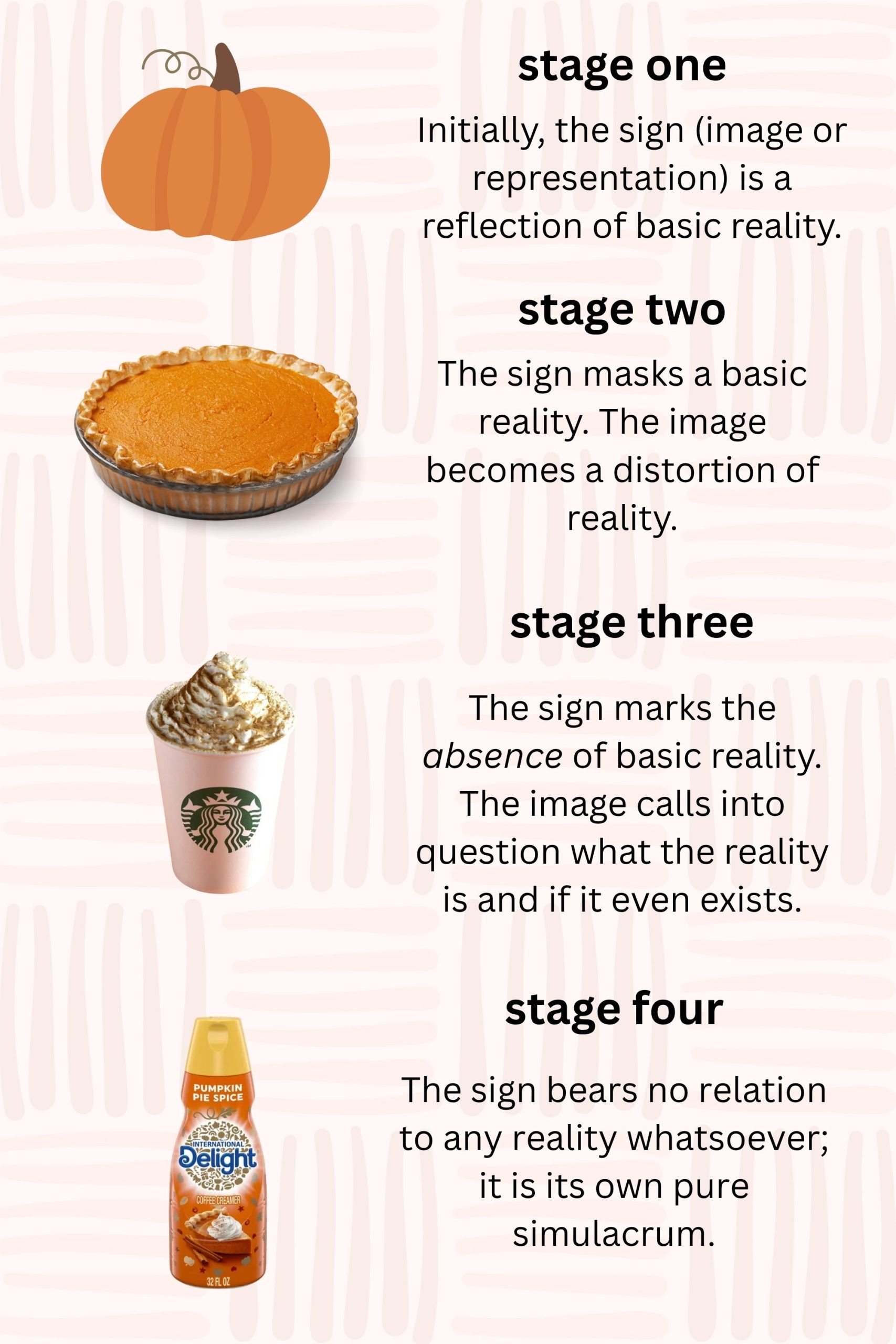
Pursuing DR for it’s own sake is like some stage three or four shit in the above image. Your DR going up in a vacuum has very little relation to the success of your business’s KPIs.
So I’m going to tell you why just focusing on an inflated SEO metric for your domain is the business version of THIS meme:

But instead of champagne you are taking carrageenan-filled pumpkin spice flavored Coffeemate creamer straight to the dome.
(I’m using memes to soften the blow, buddy).
Then I’ll tell you what to focus on instead.
the problems with SEO metrics as an indicator of success
The biggest of all problems is that this metric can be manipulated.
It’s not even all that difficult to do.
Just go to any SEO marketplace like Legiit, Fiverr, etc., and search for “increase DR.”
You’ll get a bunch of results like this:
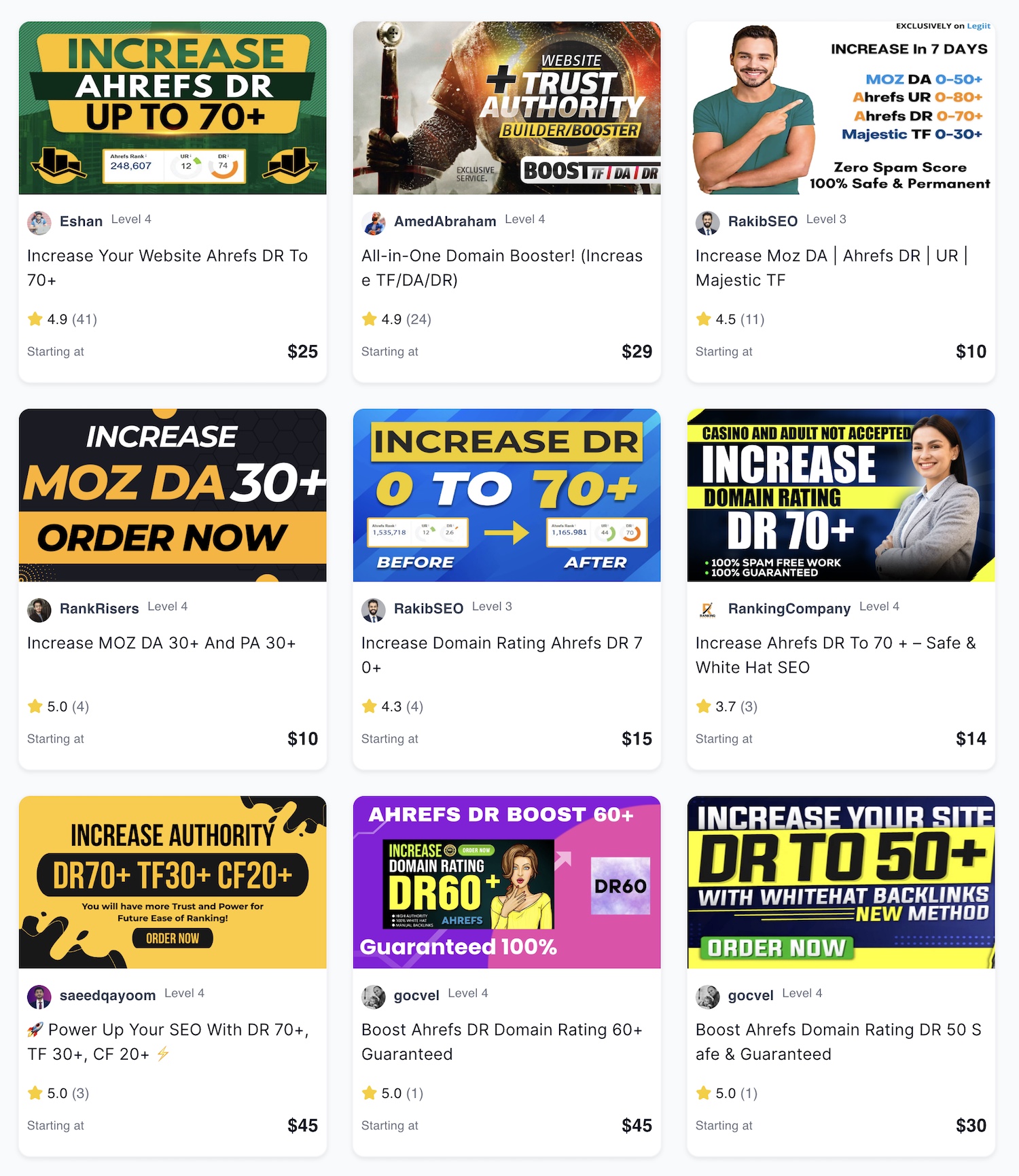
Guaranteed DR increases!
Wow, you’re gonna rank for SO MANY KEYWORDS.
Just kidding. You are not.
The high-authority-links you’ll receive will absolutely increase your site’s authority metrics. But that’s ALL it will do.
This is the worst example of the thing becoming its own simulacrum (reference earlier meme time). You’re gonna pay a lot of money for a link from a DR 60+ site, but the site doesn’t have any authority that counts, it just has links that boost authority scores but does not boost authority itself.
That’s the first problem, here’s the second:
The SEO metrics become a shorthand that ignores actually valuable things
A low DR site with a bunch of relevant organic traffic is so valuable to get a link from.
A high DR site with no traffic is not worth very much to get a link from.
I’ve seen a lot of misguided founders celebrating their DR going from 13 to 17 or something. Or stressing out because they’ve built links “but my DR is not going up.”
My dude, DR doesn’t put food on the table, you are losing site of The Main Thing for a side effect of The Main Thing As Measured By An SEO Tool.
I’ve also seen clients of SEO or link building agencies demanding DR 50+ links at the expense of foregoing valuable, niche-relevant links with a flood of actually useful organic traffic because BIGGER NUMBER BETTER.
need some SEO clarity?
If you’re an established SaaS, B2B, or eCommerce business, I’ll perform a free video audit of your website, telling you what I’d suggest improving to rank better in Google and LLMs like ChatGPT, Perplexity, and Google AI Overview.
No strings attached, apply here:
here’s how founders and CEOs can avoid this trap
First: make “valuable organic traffic” your #1 metric.
DR doesn’t matter as much as seeing that Google is rewarding a site with REAL organic traffic.
I’m not talking about sites that try and rank for “<celebrity name> net worth” or “<popular TV show> download” or something. Those are low competition, high search volume keywords that have nothing to do with the garage door business related domain they’re built on, and they’re not gonna help you rank your “best skateboard” article.
But if you get a link from a site that’s ranking for thousands of skateboard-related keywords? MONEY.
Second: use DR as a shorthand to quickly get a sense of site’s authority, and then ignore it.
A site with high authority and no organic traffic is not gonna help you rank.
Third: stop demanding DR thresholds for link building.
It’s hurting you. Prioritize relevancy and sites that Google loves to give organic traffic to.
